NordVPN
NordVPN Review 2026: We Tested Its Speed and Detection
Four independent no-logs audits back NordVPN's privacy claims. We ran it through our own tools too: it scored 80/100 against VPN detection, but gave up 70.8% of our download speed.

Independent reviews
We pay for the subscription, run the leak tests ourselves, and read the audit before writing a word.
Every review covers what the service costs at renewal, what its no-logs claim is worth on paper, and where it falls short.
 Best overall
ExpressVPN
4.6
/ 5
PrivacyTestLab verdict
Read review
Best overall
ExpressVPN
4.6
/ 5
PrivacyTestLab verdict
Read review
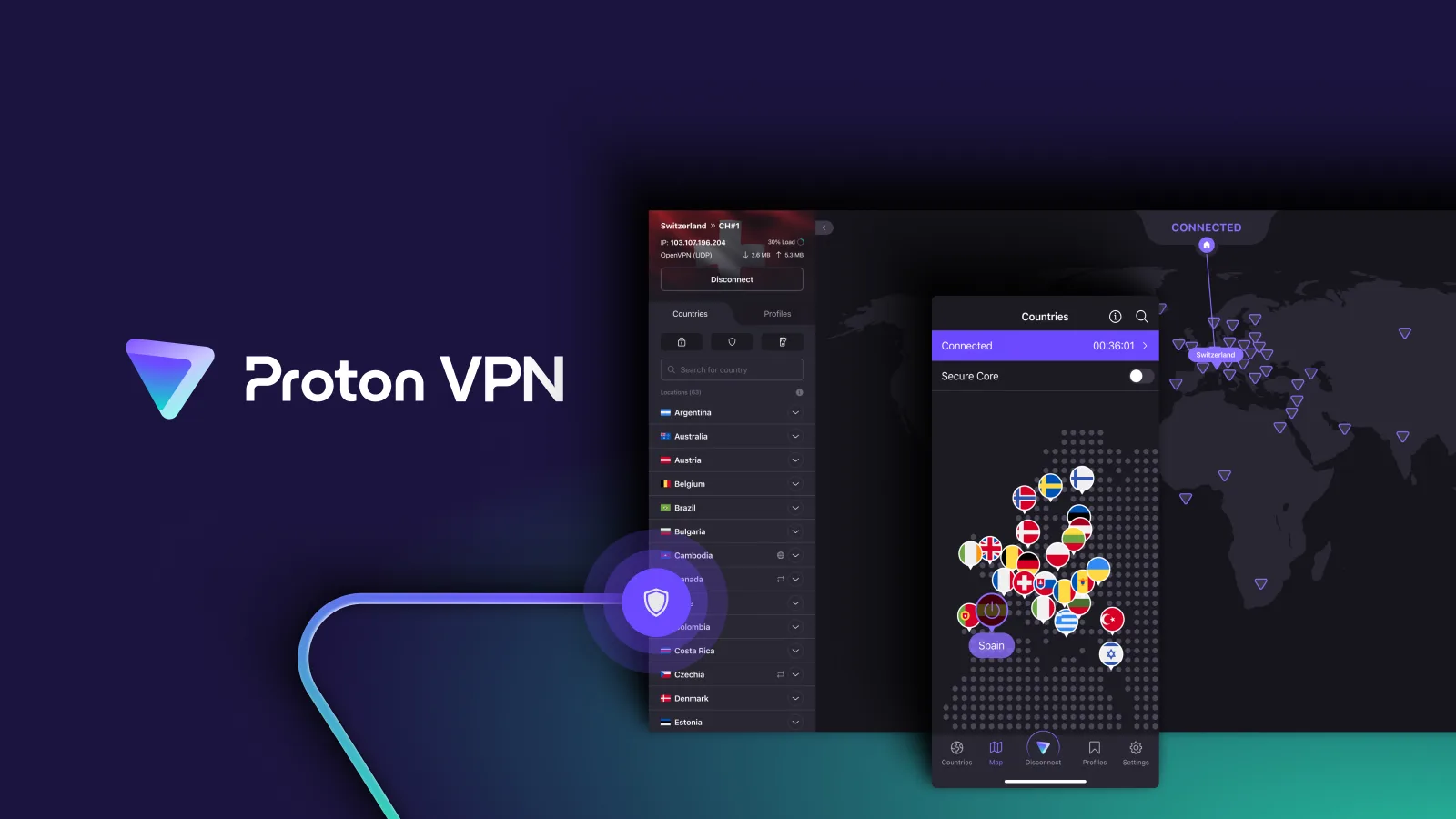 Best free plan
Proton VPN
4.5
/ 5
PrivacyTestLab verdict
Read review
Best free plan
Proton VPN
4.5
/ 5
PrivacyTestLab verdict
Read review
 Best for unlimited devices
Surfshark VPN
4.5
/ 5
PrivacyTestLab verdict
Read review
Best for speed
NordVPN
4.4
/ 5
PrivacyTestLab verdict
Read review
Best for unlimited devices
Surfshark VPN
4.5
/ 5
PrivacyTestLab verdict
Read review
Best for speed
NordVPN
4.4
/ 5
PrivacyTestLab verdict
Read review
 Best for streaming
CyberGhost VPN
4.2
/ 5
PrivacyTestLab verdict
Read review
Best for streaming
CyberGhost VPN
4.2
/ 5
PrivacyTestLab verdict
Read review
Ranked by the score each product earned in its own review. We've reviewed 6 VPNs in total — the rest are further down.
NordVPN Review 2026: We Tested Its Speed and Detection
Four independent no-logs audits back NordVPN's privacy claims. We ran it through our own tools too: it scored 80/100 against VPN detection, but gave up 70.8% of our download speed.
Surfshark VPN Review 2026: Price, Servers & Country Access
Surfshark is the rare budget VPN that doesn't feel budget — unlimited devices on every plan, two completed Deloitte audits, and a genuine antivirus bundle. It also shares a parent company with NordVPN. Here's what that actually means.
CyberGhost VPN Review 2026: Price, Free Trial & Country Access
CyberGhost is one of the cheapest audited VPNs on the market, with the longest refund window in the industry. It also shares an owner with ExpressVPN, and it won't get you online in China. Here's what actually holds up.
ExpressVPN Review 2026: Price, Speed, China & India Access
ExpressVPN is the VPN most often recommended for China and for Netflix, and it's owned by a company with a genuinely uncomfortable hiring decision in its history. Here's the pricing, the download steps for every platform, and the audit record.
Proton VPN Review 2026: Free Plan, Price, Download & China
Proton VPN's free plan has no data cap, unlike almost every other free VPN. Here's what that tier actually limits, five years of audit reports, and why China is the one place it struggles.
iTop VPN Review 2026: Is It Free, and Is It Safe?
iTop VPN advertises a working free tier, rock-bottom long-term pricing, and a no-logs promise. We checked all three — including the "Daily Boost" reward that pays out a tenth of what it promises.
| VPN | Review published | Length | Link |
|---|---|---|---|
| NordVPN | Aug 24, 2026 | 19 min read | Read |
| Surfshark VPN | Aug 8, 2026 | 22 min read | Read |
| CyberGhost VPN | Aug 7, 2026 | 21 min read | Read |
| ExpressVPN | Aug 7, 2026 | 22 min read | Read |
| Proton VPN | Aug 2, 2026 | 17 min read | Read |
| iTop VPN | Aug 1, 2026 | 14 min read | Read |
No scores or award badges here on purpose — we don't publish a number we can't show the working for. Each review lays out what we found and what it cost.
The single most useful thing to understand before spending money is what a VPN actually changes. It encrypts the connection between your device and the provider's server, which stops your internet provider and anyone on the same network from seeing which sites you open. It also replaces the IP address that websites see with one belonging to the provider.
That is genuinely worth having on hotel and airport Wi-Fi, and it is the reason a VPN can reach content restricted to another country. What it does not do is stop tracking you carry with you. Cookies, browser fingerprinting, and being signed into an account all identify you exactly as before. If you log into your usual accounts through the tunnel, the sites on the other end still know who you are.
The practical effect is that you are moving trust rather than removing it: your internet provider can no longer see your browsing, but the VPN provider now can. Everything else on this page is really about deciding which providers deserve that.
Every provider says it keeps no logs. The phrase costs nothing to print, so it tells you nothing on its own. What separates the claim from marketing is whether an outside firm has been allowed to inspect the running infrastructure and publish what it found.
When you look at an audit, check three things: who performed it, what they were actually given access to, and how recent it is. An audit of a mobile app is not an audit of the server fleet. A report from four years ago describes a company that may no longer exist in the same form. And an audit commissioned and summarised by the provider itself, with no published report, is a press release.
The strongest evidence is not an audit at all — it is a court case in which a provider was ordered to hand over data and demonstrably had none to give. That has happened to a small number of providers, and it is worth more than any marketing page.
Providers compete loudly on server counts and country totals, which are among the least useful numbers available. A few thousand servers you never use changes nothing about your privacy. Ownership does.
A number of well-known VPN brands are owned by the same parent companies, and some of those parents also own the review sites ranking them. Others have previously operated advertising or data businesses. None of that is automatically disqualifying, but it is context you want before handing a company your entire browsing stream, and it is rarely mentioned on the product page.
Jurisdiction matters for the same reason, though less than it is usually made to sound. What a government can compel a provider to hand over only matters if the provider is holding something in the first place.
VPN pricing is built around a long first term. The headline figure is almost always a two or three year plan divided into a monthly number, and it renews at a substantially higher rate. Buying the same service for one year, or monthly, often costs several times as much per month.
Before subscribing, find the renewal price rather than the introductory one, check whether the money-back window is counted from purchase date, and confirm cancelling is possible from the account page rather than only by contacting support. These are the details that decide whether a cheap VPN stays cheap.
We buy the subscriptions at full price rather than accepting review copies, so everything below is based on actually using the product — including the parts that only show up after you've paid, like the renewal price and how hard the software is to cancel or remove.
PrivacyTestLab does earn money from a small number of affiliate partnerships, and those links are marked. What that money does not do is change a verdict: written recommendations go through the same evaluation regardless of whether an affiliate relationship exists, and no business pays for placement on this page. The full breakdown of how the site earns is on the transparency page.
No. It hides your traffic from your internet provider and hides your IP address from the sites you visit, but it does nothing about cookies, browser fingerprinting, or the fact that you are signed into your own accounts. Anonymity requires changing your behaviour, not just your route.
Running a VPN network is expensive, so a free service is being paid for somehow. Sometimes that is an upsell to a paid tier, which is fine. Sometimes it is advertising, data sale, or injecting trackers, which defeats the purpose entirely. Free tiers from providers with a real paid product are the safer end of that range.
Yes, somewhat — encryption and the extra distance to the server both cost speed. On a modern protocol and a nearby server the loss is often small enough not to notice. Connecting to a server on another continent is where slowdowns become obvious.
It stops them seeing which sites you open and what you send. They can still see that you are connected to a VPN, how much data you are moving, and when. In most countries that is unremarkable, but it is not invisibility.
In most countries yes, and many workplaces require one. A small number of countries restrict or ban them outright, and some services ban them in their terms even where the law does not. Using one does not make an otherwise illegal activity legal.
 Best VPN in 2026: What the Audits, Ownership Records, and Fine Print Actually Show
We read the published no-logs audits, checked who actually owns each provider, and priced out the renewal traps. Here's how NordVPN, ExpressVPN, Proton VPN, Surfshark, Mullvad, and IVPN really compare in 2026.
14 min read
Best VPN in 2026: What the Audits, Ownership Records, and Fine Print Actually Show
We read the published no-logs audits, checked who actually owns each provider, and priced out the renewal traps. Here's how NordVPN, ExpressVPN, Proton VPN, Surfshark, Mullvad, and IVPN really compare in 2026.
14 min read
 Free VPN vs Paid VPN: Who's Actually Paying For Your 'Free' Connection?
Free VPNs don't run on goodwill. We looked at how they actually make money — from bandwidth reselling to a Facebook-owned app that helped decide which startups to acquire — and what the research says about the real risk.
10 min read
Free VPN vs Paid VPN: Who's Actually Paying For Your 'Free' Connection?
Free VPNs don't run on goodwill. We looked at how they actually make money — from bandwidth reselling to a Facebook-owned app that helped decide which startups to acquire — and what the research says about the real risk.
10 min read
 WireGuard vs OpenVPN: 2026 VPN Protocol Comparison
WireGuard and OpenVPN explained in plain terms, then the technical differences that actually matter: speed, security design, censorship resistance, and how each one handles your IP address.
11 min read
WireGuard vs OpenVPN: 2026 VPN Protocol Comparison
WireGuard and OpenVPN explained in plain terms, then the technical differences that actually matter: speed, security design, censorship resistance, and how each one handles your IP address.
11 min read
Every product on this page was paid for out of pocket and used before it was written about. Nothing here is a press release, and no business can buy a place on the list or a change to what we found.
Tool releases and research notes, sent when there's something worth reading. Nothing else.